LISA OSTRIKOFF
Special to The Globe and Mail
Published
Last updated
My last column on brand journalism sparked some great discussion and more questions from my network on exactly how businesses can implement a brand journalism strategy. Just to recap: Brand journalism is a useful way for brands, big and small, to use the approach of professional journalists to create, curate and share expert content in the form of blogs, articles and video. Businesses are essentially becoming their own media houses too, whether hiring internally or contracting out to people with journalism backgrounds.
Home Depot, Cisco and Boeing are just some of the more commonly talked about larger brand journalism examples, producing relevant media for their audiences in the forms of how-to content, demonstration videos as well as pages upon pages of industry-relevant information. You’ll never see any of the content pieces screaming ‘buy now.’ Rather – the aim is to educate, inform and even entertain its consumers.
RedBull, for example, constantly strives to ‘wow’ its fans through its brand journalism efforts.
The Austrian energy drink company has essentially created its own media network that pushes its content strategy via Red Bull Media House. Dubbing it as “Fascinating people, inspiring stories,” it’s content marketing library boasts thousands of professional videos on it’sYouTube channel. With 1.6-million subscribers and 550-million video views – its strategy is something to take a second look at.
RedBull’s content focuses on sports and events and, of course, athletes. It’s exciting and captivating content distributed via a variety of digital platforms including web video and social media. But YouTube is where it re ally rules. In fact, RedBull is one of the top five YouTube sports content producers in the world, and has launched more than a dozen web TV shows featuring its sponsored athletes.
The brand placement itself is minimal, if non existent, as the emphasis is instead on simulating and exciting content. RedBull’s magic brand journalism formula: create content people want to watch and share, while ensuring whatever it is in alignment with their image and message.
The idea central to brand journalism is that a brand needs to offer value in order to get something valuable back. Consumers are smarter than ever before and demand more respect. If a company can tell those stories in an authentic and non-intrusive way, it’ll start building a loyal community that wants to live, breathe and share this brand.
Businesses, marketers and advertisers can all learn a thing or two from Red Bull’s brand journalism approach. Next time you’re thinking about launching a ‘push’ commercial, bend your mind a bit. Instead, become the show.
Special to The Globe and Mail
Lisa Ostrikoff is a TV journalist and anchor-turned-creator of BizBOXTV, a Canadian online video production, advertising and social media marketing agency. You can find her on Twitter and Facebook.
Check out my latest e-book entitled: "Social Media Marketing in Agri-Foods: Endless Profit and Painless Gain".
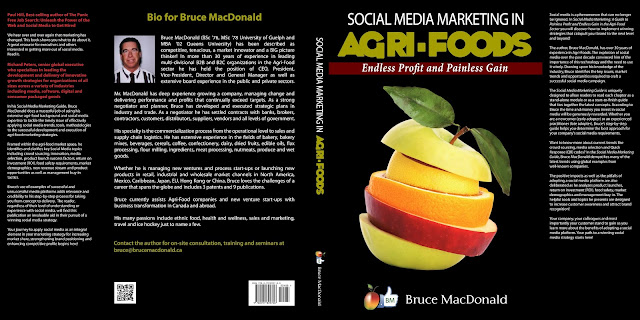
The book is available on Amazon and Kindle for $4.99 USD. Visit amazon/Kindle to order now:
http://www.amazon.ca/Social-Media-Marketing-Agri-Foods-ebook/dp/B00C42OB3E/ref=sr_1_1?s=digital-text&ie=UTF8&qid=1364756966&sr=1-1
Written by Bruce MacDonald, a 30 year veteran of the Agri-food industry, in "Social Media Marketing in Agri-Foods: Endless Profit and Painless Gain", Bruce applies his background and expertise in Agri-foods and social media to the latest trends, tools and methodologies needed to craft a successful on-line campaign. While the book focuses on the Agri-food market specifically, I believe that many of the points Bruce makes are equally applicable to most other industries.


