Showing posts with label Innovation. Show all posts

Saturday, 5 April 2014

AGRI-FOOD TRENDS: Five Hot Food Trends in 2014


Five Hot Food Trends in 2014

Posted: Updated: 
Print Article
At a travel writer, I eat out. A lot. Over the years, I've noticed trends on menus that are baffling (pork-belly, fried chicken, salty sweets), great if done right (Brussels Sprouts, kale) and niche (vegan). This year, I was invited to the International Restaurant and Food Show in New York City, and I happily accepted -- curious about the new kale, sprouts or sea-salt caramel coming down the pike.
There were over 500 exhibitors in the cavernous Javits Center representing eager food purveyors, culinary renegades, doggy bag crafters, vineyards, farms, all-natural soda bottlers, and kitchen equipment and furniture suppliers. Most offered samples. It was a very caloric day, but hey, all in the spirit of research. Product developers, mom and pop cooks, and professional chefs all offered their most promising sweets and savories.
What food trends are foodies embracing now? Which products caught my eye and taste-buds? Though hardly exhaustive, these fads and foodstuffs stood out:
1. One of the biggest trends is a proliferation in naturally flavored, low calorie, artisanal carbonated beverages, raw juices, and filtered sparkling water.
Bruce Cost Ginger Ale is made with 100 percent fresh ginger -- only 66 calories per bottle and sweetened with monk fruit.
2014-03-18-RipeBarJuice.jpg
Ripe Bar Juice, out of New Haven, CT eschews processed chemicals, using only organic, raw ingredients in their Bloody Mary and Margarita mixes. This company also bottles "Project Fresh" -- a variety of organic cold pressed craft juice perfect for cleanses.
2014-03-18-FoundBeveragCo.jpg
NY City-based Found Beverage Company features some of the best "infused sparking waters" on earth. My favorite is the pallet-cleansing Cucumber Mint.
Spindrift, from Boston, MA, offers "Fresh Squeezed Sodas," in flavors like blackberry, grapefruit, orange mango and half and half (tea and lemonade), sweetened with just a touch of cane sugar.
2014-03-18-AguaEnervivaFlavoredWater.jpg
I can attest to the effectiveness of Agua Enerviva flavored waters. An alternative to lab-made energy and sports drinks, this mostly natural (it's sweetened with Splenda) flavored water combines electrolytes and caffeine to keep you hydrated and alert.
2014-03-18-SaratogaWater.jpg
Let's not forget tried and true spring-fed bottled water. Saratoga leads the pack in its eye-catching bottle color and design.
2. Exotic and Natural Ice Creams:
Chloe's Soft Serve and pops are made with three ingredients: fruit, water and "a tough of cane sugar." The soft serve is amazingly creamy for a pure fruit ice cream.
2014-03-18-MochiIceCream.jpg
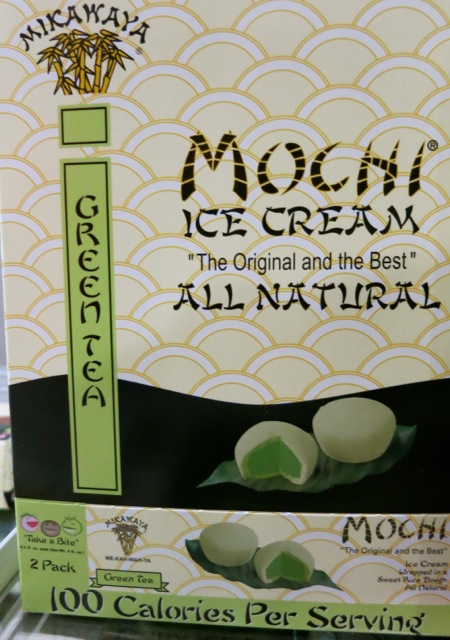
Mikawaya Mochi: green tea and other flavored of ice-cream encased in chewy rice dough, Mochi is as sweeping a sensation as Bubble Tea was a few years ago.
3. Gluten free baked goods have evolved from those first-generation hockey pucks into something resembling real artisanal loaves.
Brooklyn-based Everybody Eats bakes light and airy bread that is both gluten and dairy-free.
2014-03-18-NoWayItsGlutenFree.jpg
No Way! It's Gluten-Free out of Jamaica, N.Y. bakes up moist and deceivingly non-gluten-y Veggie Muffins, dinner rolls and other sweet items.
4. Plant-based egg substitute. A revolutionary product, the brains at Hampton Creek Foods have engineered cholesterol-free fluffy-enough-for-omelet eggs out of a certain variety of the Canadian Yellow Pea plant. Currently, you can purchase Hampton Creek's non-dairy, non-soy, non-GMO creamy Just Mayonnaise at Whole Foods and Costco.
5. Honest to goodness sauces and jams from the earth, canned by folks far from Brooklyn.
2014-03-18-JerseyItalianGravy.jpg
Jersey Italian Gravy out of Ridgewood, NJ has only five, count 'em, five ingredients: vine-ripened tomatoes, onions, olive oil, salt and cane sugar. Just like Grandma's, if Grandma came from Jersey.
Beth's Farm Kitchen jams and chutneys are all cooked up in Beth's Columbia County NY kitchen. Hence the name. She uses over 39,000 lbs of fruit a year to create these wonderfully tasty condiments.
2014-03-18-CliftonDrySparklingAppleWine.jpg
My favorite homespun drink: from Finger Lakes region of NY, Cliffton Drywine-style sparking cider. With no added sugar, this slightly alcoholic beverage (5.5 percent) is just 95-110 calories per 12 oz bottle. Made from premium New York State apples, it drinks like a chardonnay rather than hard cider, and will be the perfect snappy accompaniment to kale salad on a hot summer's day.
My favorite food of the day: Honey Smoked Fish Co. The guys behind Honey Smoked Salmon have a right to be a bit bombastic. "This is the only superfood that's ready to eat," say co-owners Kevin Mason and Keith Jones. With the faintest touch of honey, this fish is moist, buttery and delicately smoked. Perfection. Good thing you can purchase a pound at Costco for just $13.99.
You'll find many restaurants using these ingredients and foodstuffs and lots of offbeat Northeast U.S. travel ideas on GetawayMavens.com.
Follow Malerie Yolen-Cohen on Twitter: www.twitter.com/malerieyolen

Tuesday, 1 April 2014

IMPROVING BUSINESS EARNINGS PART 3: ‘Swinging for the fences’: 3 ways to tell if your company can win big-innovation bets

‘Swinging for the fences’: 3 ways to tell if your company can win big-innovation bets


 | 
More from Mitchell Osak
Harvard researcher Anita Elberse found companies in the entertainment and publishing industries with superior financial returns had strategically focused their efforts and capital on producing movie blockbusters, recruiting superstar athletes or signing popular authors. To use a baseball metaphor, these firms always swing for the fences instead of playing it safe trying for singles and doubles.
Michael Ivins/BloombergHarvard researcher Anita Elberse found companies in the entertainment and publishing industries with superior financial returns had strategically focused their efforts and capital on producing movie blockbusters, recruiting superstar athletes or signing popular authors. To use a baseball metaphor, these firms always swing for the fences instead of playing it safe trying for singles and doubles.
Companies could learn much about innovation from the Spanish general, Hernan Cortes.  In 1518, Cortes was instructed to sail to Mexico and overthrow the Aztec empire. According to the story, he proceeded to scuttle his boats after putting down a mutiny of some of his staff. This sent a powerful message to his soldiers that there was no retreat. They would conquer Mexico or die in their efforts. History judged his decision successful (if not immoral). His small army of 500 soldiers conquered the country in a mere two years.  What management lessons can be gleaned from this historical episode?
An “all or nothing” strategy seems counter-intuitive when looking at the best way to commercialize risky innovations.  Conventional wisdom says that launching small, measurable experiments or pilots is the best, lowest risk approach to introducing new products or technologies. Though this seems like a prudent tack, it has not necessarily produced market wins. Numerous studies show that the success rate for new products has stubbornly hovered around 10-20%. Fortunately, there may be a better way to commercialize innovation.
A professor at Harvard Business School, Anita Elberse, has studied creativity-driven industries like music, sports, movies and publishing.  In her book Blockbusters, Elberse found that the companies with superior financial returns had strategically focused their efforts and capital on producing movie blockbusters, recruiting superstar athletes or signing popular authors. To use a baseball metaphor, these firms always swing for the fences instead of playing it safe trying for singles and doubles. According to her data, these industries exhibit a ‘winner take all’ dynamic; less than 10% of projects, teams or entertainers produced more than 90% of industry revenue and profit.
In “winner take all” markets, the best strategy is to singlehandedly aim for blockbuster products.  The best way to do this is to focus investment and management attention on proven entities, assets or projects, like a movie sequel, a superstar free agent athlete or a popular book franchise.  Funding a limited number of major innovations is not enough. You also need to front-load your sales and marketing effort to boost initial channel distribution and trigger word-of-mouth effects. Elberse considers a blockbuster strategy a lower risk approach because it improves the odds of success early on and enables firms to cut their losses if results do not pan out.
Applicability to other markets
While Elberse studied the creative and sporting industries, other information-driven sectors may experience similar blockbuster dynamics. Industries with high fixed costs, a low marginal cost (when producing more) and a high marginal profit (on each additional sale) can quickly evolve into “winner take all” markets, particularly when digital technologies reduce customer search costs and eliminate the need for physical proximity between the buyer and seller. There are many reasons for all CEOs to consider this approach for their business:
Rallying the troops
Big innovation bets focus employee and supplier attention, create positive urgency and prevent individual or departmental agendas from stealing resources.
Many R&D projects, particularly small ones, can develop institutional momentum making them difficult to cancel.  Managing this portfolio can generate significant complexity, increasing organizational cost and diffusing effort.  A blockbuster strategy eliminates these wasteful costs plus allows managers to best leverage scale economies in areas like media buying and raw material purchases.
Movie studios concentrate investment and time on stories, actors and directors with proven consumer appeal (e.g., a sequel).  The discipline of only targeting key customer needs in profitable segments with real innovation improves the chances of market success.
Elberse’s learnings are relevant to many other industries including education, training, professional services and software. However, not every firm is a good fit. We believe enterprises should have three characteristics:
1.  Self-awareness
Companies that are good at placing the right innovation bets tend to have a good sense of what their core competencies are and where they need to partner or bypass.
2.  Decisiveness
Though having a good innovation evaluation process is important, management still needs to make tough calls quickly in periods of uncertainty.  Moreover, following a blockbuster strategy requires firms to have a culture and performance measurement system that is tolerant of failure.
3.  Nimbleness
Rigid plans lead to risky, binary decisions. Even in the movie industry, extensive consumer research still takes place.  Producers don’t hesitate to make edits or change endings based on focus group research.
Utilizing a blockbuster approach goes against conventional wisdom.  However, there are many examples of hurting companies like Apple, IBM and Xerox that followed this strategy and have re-emerged as winners.  Managers should understand their operational dynamics, consider the strong financial business case, and analyze theimpact of digital tools like search bots or recommendation engines that create “winner take all” effects.
Mitchell Osak is managing director of Quanta Consulting Inc.  Quanta has delivered a variety of strategy and organizational transformation consulting and educational solutions to global Fortune 1,000 organizations.  Mitchell can be reached at mosak@quantaconsulting.com