Showing posts with label GMO food. Show all posts

Tuesday, 21 January 2014

FOOD SUSTAINABILITY: Part 3 - The GM Controversy
FOOD SUSTAINABILITY: Part 3 -  The GM Controversy


        Box 1. GM controversy
        There is controversy over whether GM can increase crop yields while conserving resources. GM crops in commercial cultivation mainly express two traits — herbicide tolerance and pest resistance. These traits promise higher yields with lower pesticide use. However, their impacts have been variable and depend on a range of external factors. For example, India, China and South Africa found that socioeconomic, agronomic and institutional factors have had a big impact on farmers' experiences withBt cotton technology. [14] In Africa, an analysis of 11 improved varieties showed that success depended not only on new technologies, but also on partnerships between researchers and local farmers at every stage of the innovation process. [15] 
            However, it is now clear that this early input-intensive model carries unacceptable long-term environmental impacts, for example unsustainable demands on aquifers for irrigation and damage to aquatic ecosystems. These input-intensive practices were catalyzed, in part, by inappropriate incentives and subsidies — highlighting the importance of governance for new technologies. Where these incentives were removed, agricultural practice changed accordingly. For example, insecticide use fell after Indonesia dropped pesticide subsidies in the 1990s. [12]

            There were social concerns, too. Farmers with plenty of land, irrigation and credit benefited the most, while resource-constrained farmers, smallholders, or those farming marginal land benefit ted largely indirectly — as a result of lower food costs and an increase in farm employment in favorable areas. There were also unintended nutritional outcomes of the Green Revolution. For example, intensive cultivation of high-yielding staples led to less dietary diversity and may have affected the availability and use of nutrient-dense 'wild' foods. [12] 
        New developments in agricultural S&T
        Since the 1990s, a second 'wave' of technology development has sought new crop varieties through biotechnology, with controversy focusing on genetically modified (GM) crops (Box 1). Some say GM crops are now "being taken up faster than any other agricultural technology since the plough 8,000 years ago, and are presently being used by 16 million farmers". [13]

        S&T advances have been based on molecular genetics, specifically recombinant DNA technology. This lets scientists combine genetic material from multiple sources (e.g. from two different species), creating combinations not otherwise found in nature. The first GM crop to be released for commercial cultivation was 'Roundup Ready' soybean in 1996, which resists the herbicide glyphosate, allowing farmers to apply the herbicide without harming soy crops. Since then, recombinant DNA has been used to develop 'golden rice' (a variety fortified with the vitamin-A precursor beta-carotene) and crops resistant to herbicides, insects and viruses.

        Unlike the Green Revolution, which was funded and supported by public-sector bodies, the 'gene revolution' is primarily driven by a private and global research system where new technologies find their way to developing countries through the market. [10] There is tremendous private sector funding support for transgenic crops. As of 2005, for example, the top ten multinational bioscience corporations collectively spent nearly US$3 billion per year on agricultural R&D — ten times more than that spent annually by the 15 CGIAR research centres, which together constitute the largest international public sector consortium supplier of agricultural technologies. [10]
        Better varieties for smallholders
        Smallholders deliver most of the food produced in developing nations, and their need for more productive, pest-tolerant and nutritious varieties is increasingly recognised. Several initiatives are seeking to develop and disseminate improved varieties of indigenous or traditional crops that have so far been neglected by privately funded biotechnology research.

        For example, the African Orphan Crop Consortium (AOCC) aims to map and analyse the genomes of 100 so-called 'orphan' crops, selected by African scientists, which have so far been neglected as they were not economically important on the global market. The AOCC plans to make its data and findings freely accessible to researchers and breeders in Africa and elsewhere. 

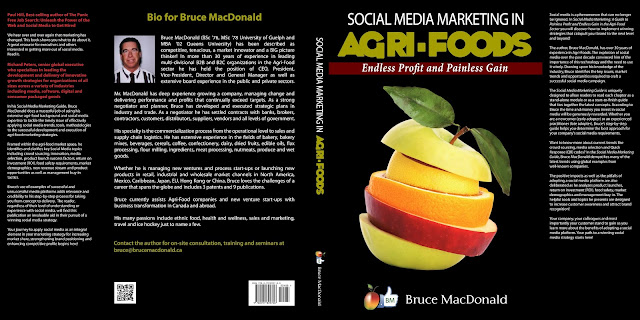
          Check out my new e-book entitled: "Social Media Marketing in Agri-Foods: Endless Profit and Painless Gain"


The book is available on Amazon and Kindle for $4.99 USD. Visit amazon/Kindle to order now:
http://www.amazon.ca/Social-Media-Marketing-Agri-Foods-ebook/dp/B00C42OB3E/ref=sr_1_1?s=digital-text&ie=UTF8&qid=1364756966&sr=1-1

Thanks for taking the time


Saturday, 16 November 2013

GMO DEBATE: Labeling issues continue to be a concern

Photo: Understanding GMO

GMO DEBATE: Labeling issues continue to be a concern
Published in the David Suzuki Foundation
GMO Corn can sneak up in processed foods. (Credit: agrilifetoday via Flickr)
GMO's — or genetically modified organisms — refer to the plants or animals created through the gene splicing techniques of biotechnology. In conversation,GMO's and GE foods refer to the same thing. They are foods created by mergingDNA from different species.
The first GMO crop (the Flavr Savr tomato) was approved by the FDA in 1994. Since then, GE varieties of corn, soya, sugar beets and canola have become common local crops in Canada. In addition to locally produced crops, GE varieties of cottonseed oil, papaya, squash and milk products are imported from the USAinto Canada. In a mere 20 years, GMO ingredients have made their way into most of the processed foods available on Canadian grocery shelves. Apples, potatoes and wheat are all in the lineup for approval.
GMO crops, when first introduced, were touted as the answer to world hunger. The argument was that by developing pesticide and herbicide resistant crops, farmer's would be able to increase their yields and decrease their costs. This has not proven to be the case. Instead, bugs and weeds have become increasingly resistant to the widespread applications of these chemicals, leading to increased use of both. More spraying means more costs for the farmers, more damage to the environment and more health concerns.
On the flips side, it means more product purchased from the seed producer. The companies that develop and patent GMOseeds are the same companies that develop and patent the pesticides and herbicides to which the unique seeds are resistant. Monsanto is the largest seed company in the world and owns about 86% of GMO seeds sown globally. It is also the parent of Roundup.
The safety of GMO foods is unproven and a growing body of research connects these foods with health concerns and environmental damage. For this reason, most developed nations have policies requiring mandatory labeling of GMO foods at the very least, and some have issued bans on GMO food production and imports.
In Canada we do not.
Canadians are often unaware that the foods they choose contains GMOingredients. It is this basic right to choice that is behind the growing movement to have GMO foods labeled. While environmental and food advocates lobby for labeling, other groups, like The Non-GMO Project, have created voluntary non-GMO certification to facilitate consumer information.
Check out my new e-book entitled: "Social Media Marketing in Agri-Foods: Endless Profit and Painless Gain"


The book is available on Amazon and Kindle for $4.99 USD. Visit amazon/Kindle to order now:
http://www.amazon.ca/Social-Media-Marketing-Agri-Foods-ebook/dp/B00C42OB3E/ref=sr_1_1?s=digital-text&ie=UTF8&qid=1364756966&sr=1-1

Thanks for taking the time

GMO DEBATE: Colle Farmers Market Discusses the GMO Labeling Debate in Washington State

Colle Farmers Market Discusses the GMO Labeling Debate in Washington State

Published November 16, 2013 in Digital Journal

Colle Farmers Market responds to an article published by Al Jazeera on November 5th, which states that Washington state has become the center of the GMO labeling controversy.


According to an Al Jazeera article entitled “GMO labeling debate grows in the US,” a large debate emerged in Washington over Initiative 522, a state law that would require special labels for food products made with GMOs, or genetically modified ingredients.

The article says the initiative has been extremely controversial. Biotech and food corporations, who oppose the bill, believe that the bill will make GMO products unsellable, causing farmers to find different methods of farming and raising cost. In the article, Brandon Roozen, of the Skagit County Farm Bureau, describes the effects of the law on farmers. He says, "Right now, when you're operating a farm business, you're working [a majority] of the time just to make ends meet. The rest is profit margin, and anything that cuts into that margin affects things like employment and infrastructure."

Health experts say that GMO products are unnatural and are unhealthy both for humans and the environment, though scientists have not been able to come to a consensus on the side-effects of GMO foods. Either way, the law could decide the future of food law in the United States, as the decision will likely impact national attitudes towards genetic modification and twenty other states are currently reviewing similar laws.

A representative from Colle Farmers Market, an online farmers market, agrees that consumers need to know what they are ingesting. “There are significant concerns about GMO products. These issues range from health and environmental problems to discrepancies with corporate patent laws. Consumers have a right to know what they are buying and what they are eating. It’s a consumer’s choice to choose between organic products and GMOs. However, they must be labeled so consumers can make that choice. You can understand why Washingtonians would want to take GMO products off the market instead of risking the aforementioned problems.”
Colle Farmers Market is an E-Commerce enabled community that is passionate about sustainable consumption and responsible conservation. The Colle movement is dedicated to connecting natural product vendors, organic farmers and all people who are living an organic and natural lifestyle.
Read the full story at http://www.prweb.com/releases/2013/11/prweb11312797.htm


Read more: http://www.digitaljournal.com/pr/1590758#ixzz2kopSykmw


Check out my new e-book entitled: "Social Media Marketing in Agri-Foods: Endless Profit and Painless Gain"


The book is available on Amazon and Kindle for $4.99 USD. Visit amazon/Kindle to order now:
http://www.amazon.ca/Social-Media-Marketing-Agri-Foods-ebook/dp/B00C42OB3E/ref=sr_1_1?s=digital-text&ie=UTF8&qid=1364756966&sr=1-1

Thanks for taking the time

Thursday, 14 November 2013

GMO DEBATE: GMO Apples Rejected By McDonald's, Gerber As Washington Labeling Defeat Neared

GMO Apples Rejected By McDonald's, Gerber As Washington Labeling Defeat Neared


rotten-apples
A new genetically-modified (GMO) apple has been rejected by McDonald's and Gerber, the companies announced within days of the defeat of a GMO labeling referendum in Washington. Flickr / rore
The anti-GMO movement took a major hit on Tuesday, when Washington voters defeated a high-profile referendum that would have enacted a genetically-modified labeling law in the state.

But announcements by McDonald's Corporation (NYSE:MCD) and Gerber Products Company stating that they would not use Arctic Apples, the world's first genetically-engineered apples, pending approval by the U.S. Department of Agriculture, emerged Thursday. The moves by the major food suppliers suggest that all the bad press on GMO foods is having an impact, despite any political wins the biotechnology industry has had in the ongoing fight over the products.
The international environmental network Friends of the Earth announced Thursday that Gerber and McDonald's wrote letters dated Oct. 31 and Nov. 1, respectively, confirming that they would decline to use the "non-browning" apples in their foods.
"As stated in your letter all of our GERBER fruit and vegetable purees are made without using GM crops," Gerber's letter reads. "We do not use Artic Apples nor do we have plans to use Arctic Apples in the future."
Genetically engineered foods have been a flashpoint for debate especially over the past year as companies like Monsanto Company (NYSE:MON) and Swiss-based Syngenta AG (VTX:SYNN) came under fire for promoting GMO products, and lobbying Congress and state legislatures to reject bills that would restrict them or require foods containing GMOs to be labeled as such.
The issue of GMOs in the food supply came to a head in March with the backlash over the so-called "Monsanto Protection Act," a measure written in cooperation with Monsanto lobbyists to limit the options of federal regulators if new health concerns about GMOs come to light. The language was infamously slipped into a continuing resolution passed by Congress to keep the government funded.
In the end, the U.S. Senate killed the measure in September despite Monsanto’s efforts to ensure it remained on the books, but the damage to Monsanto and the GMO industry had been done despite limited evidence of any negative health impacts on humans.
The Monsanto Protection Act was seen as largely responsible for virulent anti-GMO sentiment that coalesced in late May when an estimated 2 million people around the world took to the streets in the "March Against Monsanto," in an attempt to discredit the company and industry and draw attention to some of its controversial practices.
But the pro-GMO cause, which spent heavily on lobbying to defeat the measure, scored a major victory on Tuesday, when voters in Washington state rejected a referendum to mandate labeling of foods including GMOs by a margin of 54 to 46 percent, according to the tally as it stood Wednesday evening. More ballots remained to be counted as of Thursday morning, but with such a large gap the measure appeared doomed.
The controversy over GMOs continues to rage on as perhaps the most prominent of current food-safety issues, and these recent developments do little to settle that debate. What anti-GMO groups can't achieve at the ballot box appears to be taking place at the individual and company level, as the deluge of bad press regarding genetically-modified products continues unabated

Check out my new e-book entitled: "Social Media Marketing in Agri-Foods: Endless Profit and Painless Gain"


The book is available on Amazon and Kindle for $4.99 USD. Visit amazon/Kindle to order now:
http://www.amazon.ca/Social-Media-Marketing-Agri-Foods-ebook/dp/B00C42OB3E/ref=sr_1_1?s=digital-text&ie=UTF8&qid=1364756966&sr=1-1

Thanks for taking the time

Sunday, 10 November 2013

GMO DEBATE: Brazil Says 'Yes' to Genetically Modified Foods. Mexico Says 'No'

Brazil Says 'Yes' to Genetically Modified Foods. Mexico Says 'No'


A week and a half ago, according to Mexican media reports, a federal district judge issued an injunction suspending field trials of genetically modified corn. It’s been illegal to grow GM corn for consumption in Mexico since 1998, so the decision effectively means no one can grow genetically modified varieties of Mexico’s national crop for any reason.

Contrast this with what’s happening in Brazil. There, Embrapa, the national agricultural research and development institute, is going full-tilt on a project to bring to market a bean genetically modified to fight off the golden mosaic virus, a plague that, according to the Financial Times, costs the country 8 percent of its average annual bean crop. (Beans are as ubiquitous on Brazilian dinner plates as corn tortillas are in Mexico.) Some 85 percent of Brazil’s soy crop is already GM, and the country’s Centro de Tecnologia Canavieira (CTC) is working on genetically engineered varieties of sugar cane, a major crop.
Amid the global debate over genetically modified foods (also called genetically modified organisms, or GMOs), it’s striking to see Latin America’s biggest economic engines going in such different directions on the issue. Throw the U.S. into the mix, and you begin to see just how many ways people can disagree about the acceptability of tinkering with DNA in search of higher yields and hardier plants.
In the U.S., the controversy pits agricultural giants such as Monsanto (MON) and commodity corn, cotton, and soy farmers against organic farmers and the consumers who favor their produce. The debate is playing out mostly in state ballot initiatives as to whether foods with GM ingredients must be labeled as such on store shelves.
In Mexico, corn stands at the center of the conversation: The staple crop originated there, a fact deeply bound up in the nation’s sense of itself. Patriotic fervor attends protecting the landraces, the crop’s many distinctive local varietals, making any threat of genetic contamination particularly pressing. ”There are lots of social issues, religious issues, ethical issues—philosophical issues, even—that arise any time you want to talk about corn in Mexico,” says José Falck-Zepeda, an agricultural economist at the International Food Policy Research Institute. Genetic modification in crops without corn’s special sociocultural significance hasn’t merited comparable outrage. Mexico allows the commercial cultivation, for example, of GM soybeans and cotton, Falck-Zepeda points out.
Notwithstanding Brazil’s unabashedly leftist government, the country has embraced GMOs with a vengeance. Partly that’s because Brazilian farmers, lacking the sort of subsidies and price supports that the U.S. government showers on its politically important farming class, are more price-sensitive when it comes to such things as seeds, pesticides, and herbicides. Brazilian farmers have that much greater reason to embrace seeds that yield more or require fewer pesticides and herbicides, as some GM varietals do, says Mark Langevin, director of Brazilworks and an international adviser to the Brazilian Cotton Producers Association. And the Brazilian government has made a priority of attaining energy independence through sugar cane ethanol, which is driving genetic modification programs such as that at CTC, a giant bio-factory.
These pressures don’t always push toward GM crops. While Brazil’s farmers and researchers are also exploring traditional hybrid crops, according to Langevin they are relatively more open to using GMOs as part of the agricultural arsenal. Brazil is a commodities-exporting powerhouse. Much of its produce ends up in China, but some goes to Mexico, including corn. So Mexico, while banning cultivation of GM corn, allows its import. The country doesn’t have much choice in the matter because it’s a net corn importer. The birthplace of corn—where much is still cultivated on small farms using artisanal landraces—doesn’t grow enough to meet its own demand.

Check out my new e-book entitled: "Social Media Marketing in Agri-Foods: Endless Profit and Painless Gain"


The book is available on Amazon and Kindle for $4.99 USD. Visit amazon/Kindle to order now:
http://www.amazon.ca/Social-Media-Marketing-Agri-Foods-ebook/dp/B00C42OB3E/ref=sr_1_1?s=digital-text&ie=UTF8&qid=1364756966&sr=1-1

Thanks for taking the time

Saturday, 9 November 2013

GMO’s: What’s all the controversy about?

GMO’s: What’s all the controversy about?

Published   http://iml.jou.ufl.edu/projects/spring01/denlinger/problems.html
There are many questions and problems surrounding GMOs. Since it is such a new field, biotechnology and the applications of biotechnology are surrounded by scientific uncertainty (Shiva, 1999). Scientists have only conducted short-term experiments on such factors as the environmental impact GMOs will have or their possible health impacts on humans. Listed below are several main categories of these questions and in some cases, their possible solutions.


Economic


Profit Incentive
The potential for commercial gain through the use of biotechnology is evident through the large transnational corporations such as Monsanto, Dupont, and Novartis. Most private companies focus their research on staple products of western nations such as maize and wheat. Monsanto does not even produce rice, the number one crop in the world, because it is not profitable for them to do so. Labeling products that contain GMOs would place tremendous economic cost on these companies. (Klee, 2000).
Research Funds
Funding for biotechnology has taxed the already waning agriculture research funds in the world (Shiva, 1999). Opponents of GMOs argue that alternative methods of agriculture can achieve the same things as biotechnology. They cite examples of iron and calcium fortified rice, salinity resistant rice, and nitrogen fixing legumes that have been created through the use of biodiversity and biological control in Third World countries(Shiva, 2000). Hans Herren, the director of the International Centre of Insect Physiology and Ecology in Nairobi maintains society "shouldn't be driven by this unproven technology when there are many more efficient solutions to food problems." Herren ended a famine in Africa during the 1980's with an action plan based on biological control. If the same problem arose today he does not think he could find the funding for the research because biotechnology is drawing too much money (Pearce,1998). The Rockefeller Foundation, one of the largest private funds for agriculture research in the world spends more than half of their money on biotechnology (Pearce, 2000).

Environment


Testing
Scientists in labA scare related to the Monarch butterfly resulted in controversy over GMOs in the United Kingdom, but was recently shown to be false. Scientists really do not know the long-term effects of biotechnology on the natural world (Brown, 2000). The large number of variables, the constant change of the natural world and the relatively short time the technology has been around, make studies difficult.
Possible Benefits
Many people say biotechnology will actually help the environment by lowering the amount of pesticides and herbicides used in farming because of insect and disease resistant strains of organisms. Advocates also say that GMOs help eliminate the need for slash-and-burn agriculture because of increased food production per acre.
Biodiversity
How will biotechnology alter evolution? Genetic modification in an organism usually occurs over thousands of years through mutations. Does one changed gene make the organism and entirely new species? Will "super crops" wipe out older strains of an organism and decreases biodiversity? These questions have yet to be answered.

Health


Track Record
David Aaron of the United States Commerce Department states that Americans have eaten GMOs for more than 13 years and no health problems have occurred as a result. The long-term effects of GMOs on human body processes is unknown. "Genetic exchange between species can wake up dangerous, dormant viruses in the human genes," said Mae-Wan Ho, Ph. D, science advisor for the Third World Network, a coalition of groups involved in development issues (Biotech Aimed, 2000).
Food Allergies
One serious health uncertainty surrounding GMOs concerns food allergies. Since gene splicing allows a gene from any organism to be put in another, the opportunity for new combinations of genes to trigger allergic reactions exists. In opposition, some scientists believe that in the future they will identify the genes that cause the allergic reactions. The harmful gene in a organism, such as a Brazil nut, could then be removed. (Franken..., 2000).


World Hunger

A
Hunger Facts
To understand whether biotechnology can actually help end hunger, it is necessary to examine the causes of world hunger. The World Bank states that the world food supply in 1994 could have fed 6.4 billion people so hunger stems not necessarily from lack of food, but also for economic and political reasons. The world produces enough grain to feed every person at least 3,500 calories a day yet 800 million people in the world are hungry (Toler, 2000). Fifteen percent of the world's population are chronically undernourished (vanWijk, 2000).Certain groups are hit the hardest by hunger including women, children, people in rural areas and those living in underdeveloped nations. Three fourths of people who are hungry live in Asia, Africa, or Latin America (Toler, 2000).
Moral Blackmail
Many opponents argue that biotech companies are using world hunger as a form of "moral blackmail" to sell GMOs. Consumers feel they have to accept biotechnology or else they feel guilty about standing in the way of progress to help stop world hunger (Knee, 2000). The companies make themselves out to be the saviors of hungry people throughout the world, but do not actually use their expertise to help developing nations because they have no profit incentive.
Two Arguments
Many of the ethical questions about GMOs revolve around its potential ability to solve world hunger. Many people fear that the new technology would actually contribute to world hunger by making farmers dependent on private corporations for seeds or other agricultural necessities (vanWijk, 2000). A technology exists that can produce sterile seeds. Often called "terminator technology," the seeds prevent the spread of GMOs through cross pollination, but also require farmers to purchase new seeds every year. Since more than half the worlds farmers are poor, it is doubtful whether or not they could afford to buy new seeds every year (Franken...,1999). The political conflict in the West about GMOs has angered some advocates of biotechnology in developing countries. They feel it overshadows the benefits that the technology could have for the world.
"Europe has a surplus of food production. They have so much food that they are being subsidized. They don't know hunger. They don't know poverty. They are talking with their stomachs full, and they think they know what is best for Africa. That's very wrong. We should be allowed to try technology and decide for ourselves."
-Florence Wambugu, Nairobi based plant scientist (Tam,1999)
Effective Solution
The wide spread controversy surrounding biotechnology often makes it difficult to decipher facts from propaganda. Eliminating world hunger will take a integrated approach of solutions. In the end, solving world hunger is not an "inherent characteristic," of biotechnology, but it can help if its benefits are shared with those who need it most. Biotechnology has the potential to be part of the solution to world hunger if research occurs for crops beneficial to developing countries. In the 1960's and 70's the Green Revolution promised to end world hunger, but despite increased food production hunger persists today.
Check out my new e-book entitled: "Social Media Marketing in Agri-Foods: Endless Profit and Painless Gain"


The book is available on Amazon and Kindle for $4.99 USD. Visit amazon/Kindle to order now:
http://www.amazon.ca/Social-Media-Marketing-Agri-Foods-ebook/dp/B00C42OB3E/ref=sr_1_1?s=digital-text&ie=UTF8&qid=1364756966&sr=1-1

Thanks for taking the time

Monday, 4 November 2013

GMO FOODS: THE REAL FACTS PART 6

20 QUESTIONS ON GENETICALLY MODIFIED (GM) FOODS PART 6

Published in WHO

Q18. Why are certain groups concerned about the growing influence of the chemical industry on agriculture?
Certain groups are concerned about what they consider to be an undesirable level of control of seed markets by a few chemical companies. Sustainable agriculture and biodiversity benefit most from the use of a rich variety of crops, both in terms of good crop protection practices as well as from the perspective of society at large and the values attached to food. These groups fear that as a result of the interest of the chemical industry in seed markets, the range of varieties used by farmers may be reduced mainly to GM crops. This would impact on the food basket of a society as well as in the long run on crop protection (for example, with the development of resistance against insect pests and tolerance of certain herbicides). The exclusive use of herbicide-tolerant GM crops would also make the farmer dependent on these chemicals. These groups fear a dominant position of the chemical industry in agricultural development, a trend which they do not consider to be sustainable.
Q19. What further developments can be expected in the area of GMOs?
Future GM organisms are likely to include plants with improved disease or drought resistance, crops with increased nutrient levels, fish species with enhanced growth characteristics and plants or animals producing pharmaceutically important proteins such as vaccines. At the international level, the response to new developments can be found in the expert consultations organized by FAO and WHO in 2000 and 2001, and the subsequent work of the Codex ad hoc Task Force on Foods Derived from Biotechnology. This work has resulted in an improved and harmonized framework for the risk assessment of GM foods in general. Specific questions, such as the evaluation of allergenicity of GM foods or the safety of foods derived from GM microorganisms, have been covered and an expert consultation organized by FAO and WHO will focus on foods derived from GM animals in 2003.
Q20. What is WHO doing to improve the evaluation of GM foods?
WHO will take an active role in relation to GM foods, primarily for two reasons:
(1) on the grounds that public health could benefit enormously from the potential of biotechnology, for example, from an increase in the nutrient content of foods, decreased allergenicity and more efficient food production; and (2) based on the need to examine the potential negative effects on human health of the consumption of food produced through genetic modification, also at the global level. It is clear that modern technologies must be thoroughly evaluated if they are to constitute a true improvement in the way food is produced. Such evaluations must be holistic and all-inclusive, and cannot stop at the previously separated, non-coherent systems of evaluation focusing solely on human health or environmental effects in isolation.
Work is therefore under way in WHO to present a broader view of the evaluation of GM foods in order to enable the consideration of other important factors. This more holistic evaluation of GM organisms and GM products will consider not only safety but also food security, social and ethical aspects, access and capacity building. International work in this new direction presupposes the involvement of other key international organizations in this area. As a first step, the WHO Executive Board will discuss the content of a WHO report covering this subject in January 2003. The report is being developed in collaboration with other key organizations, notably FAO and the United Nations Environment Programme (UNEP). It is hoped that this report could form the basis for a future initiative towards a more systematic, coordinated, multi-organizational and international evaluation of certain GM foods.
Check out my new e-book entitled: "Social Media Marketing in Agri-Foods: Endless Profit and Painless Gain"


The book is available on Amazon and Kindle for $4.99 USD. Visit amazon/Kindle to order now:
http://www.amazon.ca/Social-Media-Marketing-Agri-Foods-ebook/dp/B00C42OB3E/ref=sr_1_1?s=digital-text&ie=UTF8&qid=1364756966&sr=1-1

Thanks for taking the time